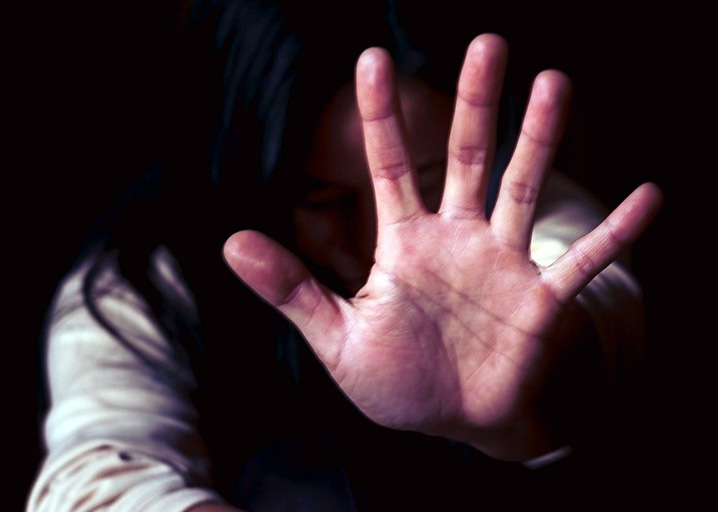
This poem, originally written in 2015, personifies domestic violence from the perspective of an observer.
Abuse does not have a face. You do not see it when it looks at you, neither can you point it out in a crowd. It does not introduce itself as such, but merely warms up to you and waits for the opportune moment to make its presence known.
Abuse does not care for your education or social status. It does not mind that you are an individual worthy of happiness, the colour of your skin makes no difference. All it wants is you – and once it has you – it aims to chew away every bit of you until there is nothing left.
Domestic violence finds it hard to say goodbye. Once it is released – it longs to own its victim. Its voice is loud, but only in your mind. It goes out of its way to speak to you when you want to walk away: “How dare you say goodbye – who do you think you are? I made you and for that, I am you!” It wants power over you longing to see make you see yourself the way it sees you – a victim, vulnerable and needy.
Domestic violence is like a web, invisible to the naked eye, until you fall into it. It tangles you with every step and every word you say. Everywhere you go, it is there. Its power is your mind that tells you that there is no way out. Like a spider creeps up to its prey, so is the victim of DV. Alone, helpless, confused and scared. But, DV is not strong. It needs you to make it look strong. It feeds on your isolation, embarrassment and shame.
The longer you stay away from loved ones, the stronger it appears. The more you protect its source and reason with the truth, the more it grows. Until all you see is a world where it is your reality, a needed comfort and a definition of love. But you see…
The driver of DV is itself, a victim. It is crippled by its own fear. It knows that by letting go, it will be alone, helpless, confused and scared. It has no identity but you – you define it, you are its power. So, walk away!
Reclaim your power! Speak up to expose its shame! You aren’t the victim, it is! The more you speak and reach out, the more you disintegrate its power and hold over you. You are powerful. You are strong! You deserve better, and you can walk away! Own your power! Walk away and claim it back!
Mase Leshilo
The United Nations declared human rights in 1948 when they defined 30 articles of human rights in the Universal Declaration of Human Rights. Those present at that sitting could have never imagined that 73 years later (24 years in the South African context), we would be living under a wide limitation of rights on a daily basis. This, of course, alludes to the global restrictions imposed on us by the Covid-19 pandemic, where rights such as freedom of movement have been enacted to restrict the movement of the virus.
In South Africa, the establishment of our constitution in 1997 marked the start of Human Rights Day. The day is linked with 21 March 1960, and the events of Sharpeville were on that day, when 69 people died and 180 were wounded when police fired on a peaceful crowd that had gathered in protest against the Pass laws. This day marked an affirmation by ordinary people, rising in unison to proclaim their rights. It became an iconic date in our country's history that today we commemorate as Human Rights Day as a reminder of our rights and the cost paid for our treasured human rights.
The day is a reminder for South Africans to reflect on and protect their rights, as well as the rights of all people from violation, irrespective of their race, gender, religion, sexual orientation, or whether they are foreign nationals or not, because human rights apply to everyone equally.
Our Constitution has, from inception, articulated limitation of rights in Section 36. Some of us may not even be aware that we have lived the limitation of rights without fully appreciating what its purpose and intent are. The bottom line is, if you care for someone else, you will not infringe on his or her rights. We may have, however, infringed on another person's rights either knowingly or unknowingly in our day-to-day interactions or activities.
When we, for example, play music loudly in our homes, we would be well within our rights to do so, namely, to enjoy our favourite music at the volume we choose to listen to it. That is our right. However, in so doing, we would also be infringing on our neighbours' rights to peace and quiet or even a good night's sleep, depending on the time of day this music would be playing.
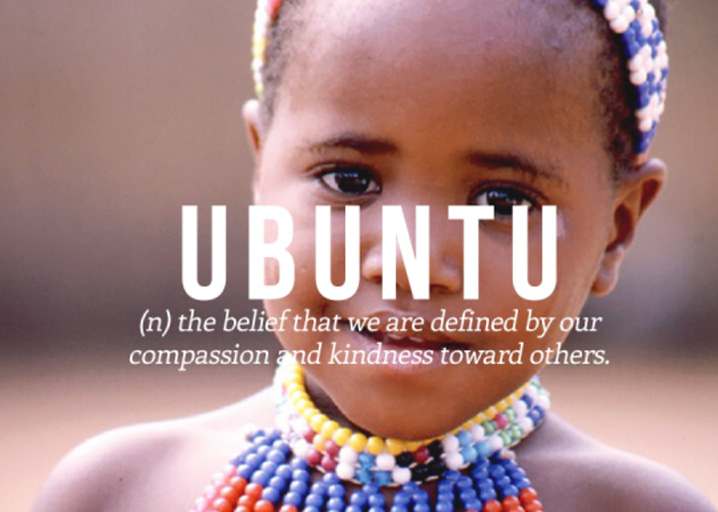
This brings us to the profound African philosophy of Ubuntu, which is central to the spirit of limiting rights. It may come as a shock to place Ubuntu and limiting in one sentence but let us explore how these two ideas connect.
At the very heart of Ubuntu lies the responsibility of showing and being kind to the next person. Ubuntu teaches us to be mindful of the next person and, in so doing, to offer to be a bridge of compassion towards them. It has been documented that our forbearers would resolve an offence by first focussing on the good deeds and nature of the accused before convicting him or her. This stemmed from the belief that each person is good and that we are all prone to making mistakes.
The practice was aimed at encouraging the offender to reconnect with his true nature, based on the belief that unity and affirmation have more power to change behavior than shame and punishment. Justice in unity, and through unity a community was built.
A lot has changed over the years, and more so now, during our "together but apart" era that aims to reduce the impact of COVID-19 on society. We all wish to exercise our human rights but, very often, do so irresponsibly.
The Constitution profiles and describes limiting rights as an act that advances care and protection for one another against those who abuse them, whether knowingly or unknowingly. This, in essence, is demonstrated by our earlier example, which shows that it is possible to enjoy our rights at the expense of another person.
As part of our human rights awareness, we share the 15 basic human rights outlined in the Constitution. This article is thus directed to Section 36 (1), which outlines the limitation of rights, as follows:
The rights in the Bill of Rights may be limited only in terms of the law of general application to the extent that the limitation is reasonable and justifiable in an open and democratic society based on human dignity, equality and freedom, taking into account all relevant factors:
The fact that we are required by law to observe Covid-19 and to take protective measures against it is, in essence, a limitation of rights. This is because the pandemic has brought with it limitations to everyday freedoms in exchange for the preservation of life. Wearing a face mask, sanitising your hands in public, or avoiding human contact may still seem unusual, but we have made significant progress since last year. We now have the freedom to use our hands without having to wear gloves in public, and our recovery rate as South Africans exceeds the rate of deaths on the international scale. We have come to adapt to this new way of living, albeit difficult at times, because we have somehow understood the importance of staying alive at all costs—which, in the end, is a fundamental human right: the right to life!
Lastly, while we all have the right to freedom of speech, let us also remember that self-expression should not infringe on another person's right to a good name. When we live, uphold, and recognise the spirit and philosophy of Ubuntu, the cornerstone of our constitution and democracy as South Africans, we live to protect the rights and freedoms of those around us!
Mase Leshilo
This poem was written in May 2020. It offers a retrospective view of what life looked like during the early years of the pandemic.
Long days turn into night Sleepy eyes come only at noon,The sun's rays call out for productivity But, where is everyone? Silence. We have gone into hibernation Storing food and goods until it is safe for us to come out and play
Empty streets and silent neighbourhoods Miss the cries and laughs of children's folly The brood of playing children and their mischievous ways Have now become a distant memory Our street corners, once a gathering place for societies and mischievous laughter, Lie barren and abandoned Only the growing grass lives to tell the tales of what once lived there
School work is piling as mom and dad catch up on meetings and deadlines Parents who can, are home schooling their fold, Enjoying the satisfaction of educating their own. When the young get bored, they are entertained: Slumber parties in the living room, movie nights, and endless braais. Forgotten outdoor games are now a hiding place We swam all day until winter came knocking. Now what? The kids are asking
Oh mom and dad, don't be too hard on yourself! This is new, for we are all searching! Searching for meaning and understanding Yearning for answers that only God can provide For you see, far in the horizon, lies a new day. It is coming, this is certain.
Until then, breathe and know that you are doing your best. And so are your children, who despite putting you to test, Look to you for rest
May the silent, yet collective chaos in our neighbourhood, Bring peace and assurance that you too are in that number. You are a pioneer: searching, hoping, crying, and praying for a way out Just like all of us, your friendly and anxious neighbours
Mase Leshilo
Many of us grew up watching images of crisp white roofs and trees on television screens around Christmas time. The people inside the screens wore heavy, knitted clothing and sat around a fire or dining table with warm cups of hot chocolate while they sang merry carols with their loved ones. We would watch these families, from the comfort of our warm living rooms with a cold drink at hand while clad in cool summer dresses or shorts. The contrast of these settings seemed very normal; after all, what is Christmas without a good Christmas movie to reinforce the season and its festivities?
However, the South African setting is very different from the one we grew up watching on TV. The holiday is celebrated in the height of summer, which means our days are longer thus giving us more time outdoors unlike the cold and dark climate our northern counterparts have to endure. The meaning of Christmas is similar across the world, where even families that do not observe its core meaning celebrate it for its outcome, which is the beauty and love found in spending time with family. We South Africans may not necessarily go door-to-door singing Christmas carols on Christmas Eve but we do have our own traditions that bind us together as a nation and community.
With many facets to our nation, the holiday becomes a symbolic representation of our different heritages which melt together to create an undying tradition for generations to come. One such tradition, which is despised by many but is an unavoidable feature on our calendar, is the long migration to our respective homes. Many of us do not originate from where our employment habitat is, what we call home is usually hours away from where live and the journey to our mother’s homes is shared by the masses of vehicles making their way home. Each year from about 15 December, our roads disappear into the long commute of cars, taxis and buses each carrying precious cargo en route a loved one’s embrace.
To many of us who live in remote areas, the call to home is often dreaded because instead of enjoying a much-needed break from the year’s toil, we rush home to action Mama’s long list of errands that she has kept all year long for our return. It entails early mornings of spring cleaning, painting the house, mending the fence, buying groceries and baking tray upon tray of biscuits for the holiday season (which only begins on 24 December or when the family is happy with the progress of house chores). One hardly has time to catch up with old friends from the neighbourhood, who may also be tied up in the same hassle.
Although the work is labour intensive, it is made easier by the presence of loved ones in the house. The communal work builds the family bond, which heightens the holiday spirit.
As South Africans, we have various experiences of what Christmas time means to each of our and our loved ones. For many, the day begins with a church service - which means early mornings and “Sunday-best” or special Christmas outfits bought (laid-by) ahead of time for that day, before dashing out of the house to make it to church on time. For others, the day starts relaxed and steadily progresses into braai fires, salad making and cooler boxes at the nearest resort or family backyard. Other families rise early to be the first one at the Christmas tree, this delight is reversed mainly for families with young children who look forward to the gift they’ve been waiting all year for. Other families who are fortunate to do so, spend their Christmas day at the beach, a holiday enjoyed by young and old alike, who spend their evenings at hotels or self-catering resorts. Who can resist the fresh taste of watermelon or peaches while sitting under a cool shade? For me personally, the smell of Christmas is the sweet smell of lychee and mangoes in the background while the family is enjoying their Christmas lunch. It denotes the season of joy and festivities and gives hope for the New Year, which at that point, is near, and glaring with wonder at us.
Many share fond memories of receiving new clothes from grandparents, while others remember with joy, the feeling of knowing that they and their cousins would be together for days without end. This is indeed a season of happiness for many, and although some may have outgrown its festivity, the onus is on us to continue a form tradition for future generations so that they too can look back and share the memories with those who are still on their way.
The heritage we share as a country is more alive in this season because families who may not have enough money to celebrate are able to feast with the rest of the community that willingly shares their bounty with them. Our happiness is tangible, even in pain. We are a nation that is able to give and heal each other and that is my prayer for this coming season. Wherever you find yourself this Christmas season, be open to receiving happiness in whatever form because it is lurking the streets to find you and leave you with hope for the days ahead.
Mase Leshilo
Our country’s economy is largely based on mineral extraction and processing which is by its nature, energy intensive with the Industrial and Mining Sectors as the heaviest users of energy. These industries account for more than two-thirds of our national electricity usage. Here lies the potential for the largest savings by replacing old technologies with new, and by employing best energy management practices.
The term load shedding has been in the South African vocabulary since November 2007 when the National Energy Regulator of South Africa (Nersa) found that measures to provide for the increased electrification programme and growth in the economy were inadequate and slow. The initial load shedding occurrence was short-lived and lasted until the end of January 2008.
However, the power grid came under severe constraints once again during the 2013/2014 summer maintenance programme which led to the implementation of load shedding in March 2014, six years after the initial incident. This was followed by rotational power cuts in January to September 2015 and in June to December 2018, which also launched the introduction of load shedding stages, starting at stage 2 in December 2018. Stage 4 load shedding was introduced in February 2019 owing to a number of power plant breakdowns.
As it stands, the Transport Sector uses three-quarters of South Africa’s petroleum products, making it an area to implement measures to improve efficiency. Government seeks to therefore promote energy efficient vehicles and those with lower emissions, thereby building a public transport infrastructure and a travel demand management system, such as the Bus Rapid Transit System approved by Cabinet in March 2007, as well as the high-speed express commuter rail system, Gautrain which was launched in Gauteng on 08 June 2010.
With this in mind, South Africa is considered as one of the world’s least energy efficient nations. We use approximately 40% of Africa’s electricity, and are the 17th highest emitter of greenhouse gasses in the world (as at 2016). Our national dependence to energy has led to the situation where our reserve margin is unsustainably low, and the reliability of our electricity supply is under threat. Our energy habits have adverse effects on our economy, our environment, and our health. They also have an adverse effect on the climate and contribute to climate change, which refers to long-term shifts in temperatures and weather patterns, and thus the creation of greenhouse gases.
This increase in greenhouse gases is attributed to the global warming trend which was observed since the mid-20th century to the human expansion of the "greenhouse effect" warming that results when the atmosphere traps heat radiating from Earth toward space.
The UN Framework Convention on Climate Change (UNFCCC), adopted at the 1992 Earth Summit is one of the first international treaties on the topic. It stipulates that parties should meet regularly to address climate change, at the Conference of Parties or COP and forms the foundation to future climate agreements. One such agreement is the Paris Agreement, which was drafted in 2015.
In their NDCs, countries communicate actions they will take to reduce their greenhouse gas emissions in order to reach the goals of the Paris Agreement. Countries also communicate in their NDCs actions they will take to build resilience to adapt to the impacts of climate change.
South Africa is one of the listed parties in this agreement and aims to limit Green House Gas (GHG) emissions to 398-510 million tonnes of carbon dioxide equivalent (MtCO2eq) in 2025 and to 350-420 MtCO2eq in 2030 (aligned with respectively 1.5 and 2 degrees of global warming) in its updated 2021 NDC.
South Africa has also set the goal to reach net zero emissions by 2050 in its Low-Emission Development Strategy thus accessing significantly higher levels of climate finance during the periods of implementation of the NDC, with a view to achieving a floor of USD 8 billion per year by 2030.
South Africa’s NDC will be implemented in a context in which significant developmental challenges need to be addressed. Low economic growth over the last decade has been accompanied by high levels of unemployment and persistent poverty and inequality. The advent of the COVID-19 crisis has also exacerbated these challenges. South Africa’s economy is expected to contract significantly before beginning to recover. At the same time, this has created an opportunity to, in the words of President Ramaphosa, “…not merely return to where we were before the pandemic struck. We are instead looking at actions that will build a new, inclusive economy that creates employment and fosters sustainable growth” (President Ramaphosa, in a letter to the nation on climate change, 24 August 2020).
South Africa is already experiencing the impacts of climate change and faces multiple challenges in relation to climate change over the next decade. Since 1990, the national average temperature has increased at a rate of more than twice that of global temperature increases, which is already resulting in more frequent droughts and extreme weather events (Wolski 2019; Engelbrecht, Adegoke, Bopape, Naidoo, Garland, Thatcher, McGregor, et al. 2015). South Africa’s economy and energy system is one of the most coal-dependent in the world and features a large stock of high-carbon infrastructure, particularly in the energy sector.
p> However, our country is also blessed with abundant renewable energy resources, and developments in the economics of renewable energy technologies over the last decade are favourable to low-carbon development in the country. This, though, needs a well-resourced transition strategy to shift to low-carbon technologies, maximize benefits and minimize adverse impacts on communities, workers and the economy.The Department of Mineral Resources and Energy (DMRE), custodians of the mining and energy sector policy is developing a Just Energy Transition (JET) Framework whose main purpose is to support the decarbonization of the minerals and energy sectors in a socially acceptable manner while contributing to the economic development of the country. A Just Transition (JT) is the principle of easing the burden decarbonization poses to those who depend on high-carbon industries.
p> The concept of a JT was developed in the USA in the 1990s as a programme of support for workers who lost their jobs due to the enactment of environmental protection policies such as, softening job losses in the mining (coal) and chemical industries. Since then, JT has developed into a deliberate effort by unions to plan for and invest in a transition to environmentally and socially sustainable jobs, sectors, and economies. As understanding of the climate change crisis grew, unions aligned JT specifically to action on climate change, inserting the concept into international regimes, including UNFCCC negotiations.The DMRE’s JET framework is being developed to provide a structure to monitor the socio-economic impacts of the transition and to support the decarbonization of the minerals and energy sectors in a socially acceptable manner while contributing to the economic development of the country. The framework will seek to align with and support the broader national effort on mitigation and just transition, minimise and mitigate against the social risks inherent in structural transformation, whilst seeking to identify and maximise the opportunities that the change brings.
p> South Africa aims therefore, to capitalise on the national and global shift to the green economy, through green industrialisation and by creating new opportunities for South Africa’s rich mineral endowment, many of which are vital for low emission and climate resilient development.Since 2015, South Africa has made significant progress in implementing its response to climate change. Company-level carbon budgets were introduced for large emitters on a voluntary basis in a first phase. As previously mentioned, our Green Transport Strategy was adopted in 2018, including policies to promote bus rapid transit, road to rail and electric vehicles. South Africa convened a Job Summit in 2018, which agreed to establish a Presidential Climate Commission to oversee South Africa’s transition. The Commission has been approved by Cabinet and is in the process of being established through the Climate Change Bill.
p> In 2019, South Africa passed a Carbon Tax Act, and started pricing GHG emissions in all sectors other than waste and Agriculture, Forestry, and Other Land Use (AFOLU). Our 2014 national mitigation potential analysis is in the process of being updated and is now maintained within government. Planning for the decarbonization of the electricity sector advanced with the gazetting of an updated Integrated Resource Plan in 2019, considering climate change mitigation amongst multiple objectives, and allocating large shares of the future energy mix to renewable energy technologies.Equally, there is an increased use of LP Gas for cooking and space heating, especially now that we are heading into winter, that will impact both energy and peak demand. In line with municipal bylaws and building codes, new housing developments are installing solar water heaters in the place of full electric geysers. Voluntarily, consumers are also increasingly replacing electric geysers with solar water heaters to reduce their electricity bills. In fact, more homeowners are looking at ways to mitigate the impact of prolonged power outages on their daily lives.
p> Thankfully, the Finance Minister, Mr Enoch Godongwana announced during the February 2023 budget speech that South Africans can receive up to R15,000 in tax rebates for solar panels starting from 1 March 2023. The Solar Panel Tax Incentive for Individuals is an incentive proposed by government to encourage households to invest in clean electricity generation capacity which can supplement electricity supply. The incentive will only be available for 1 year to encourage investment as soon as possible.b>Who can claim the incentive? Individuals who pay personal income tax can claim the rebate against their tax liability. This rebate is not intended for solar installations at business premises.
p>What can be claimed? Individuals will be able to claim a rebate to the value of 25% of the cost of new and unused solar photovoltaic (PV) panels, up to a maximum of R15 000 per individual. For example, a person buys 10 solar PV panels, at a cost of R4000 per panel (so total cost of R40 000). That person would be able to claim 25% of the cost up to R15 000, so R10 000. A different person is able to buy 20 panels at a cost of R4000 per panel (so total cost of R80 000). The calculation of 25% adds up to R20 000, but they can only claim R15 000.Mase Leshilo
© 2025 All Rights Reserved to ACME